Attention flowed into low-value paths
Search crawlers spent meaningful capacity on secondary pages while strategic product destinations were not revisited with the frequency or intensity they deserved.
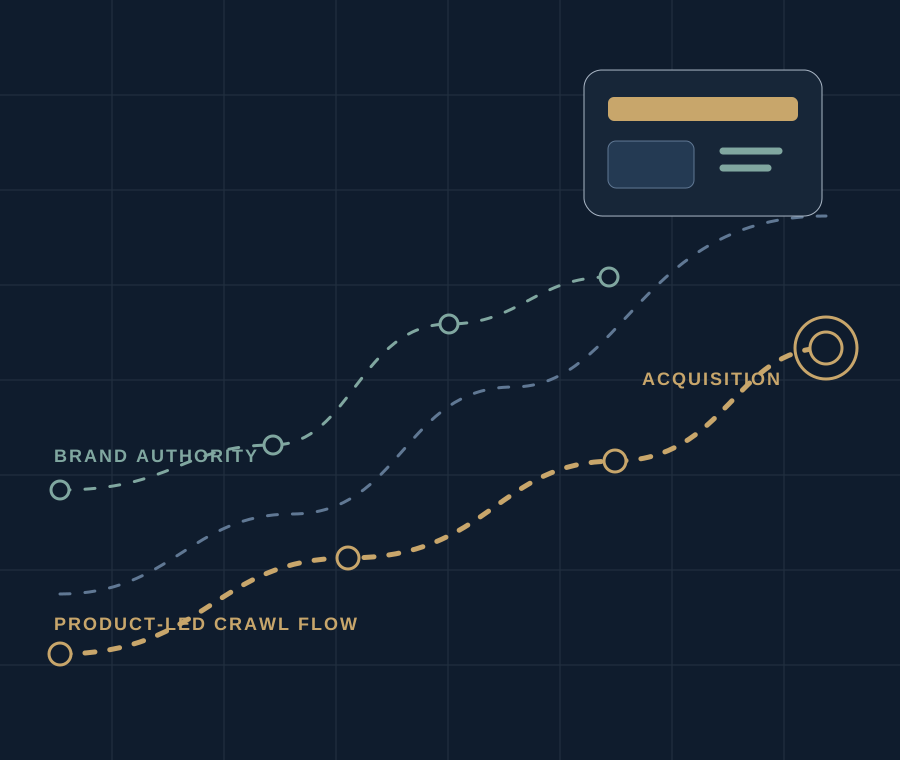
Rebuilding search infrastructure so one of Iran’s best-known payment brands could convert its authority into category-leading organic acquisition.
SEP had the brand authority. Its website did not have the structure required to turn that authority into search-market leadership.
From 2023 to 2026, we carried out a structural redesign of the website of one of Iran’s most recognizable payment brands. The constraint was neither content volume nor brand awareness. Non-standard architecture, inefficient crawl paths and dispersed internal authority prevented strategic services from realizing their organic potential. We rebuilt the site structure, redirected crawler attention toward commercial product pages and established focused landing pages for high-intent payment demand. SEP reached leading positions—including position one for target queries—and targeted organic traffic became a primary customer-acquisition channel.
Payment customers search with precise intent: they want a gateway, a POS terminal, merchant services or a payment tool for their business. SEP’s architecture did not make it sufficiently clear which page should answer each demand—or which products deserved the strongest signals.
Search crawlers spent meaningful capacity on secondary pages while strategic product destinations were not revisited with the frequency or intensity they deserved.
Weak hierarchy and indirect routes diluted relationships between services, supporting content and the pages with the highest commercial value.
SEP’s recognition in the payment ecosystem was not being translated into an equivalent presence across high-intent organic queries.
Without clear intent ownership and controlled authority flow, more awareness alone could not secure the search demand available to the business.
We addressed the problem at infrastructure level, redesigning the system around business priorities rather than treating isolated pages or keywords.
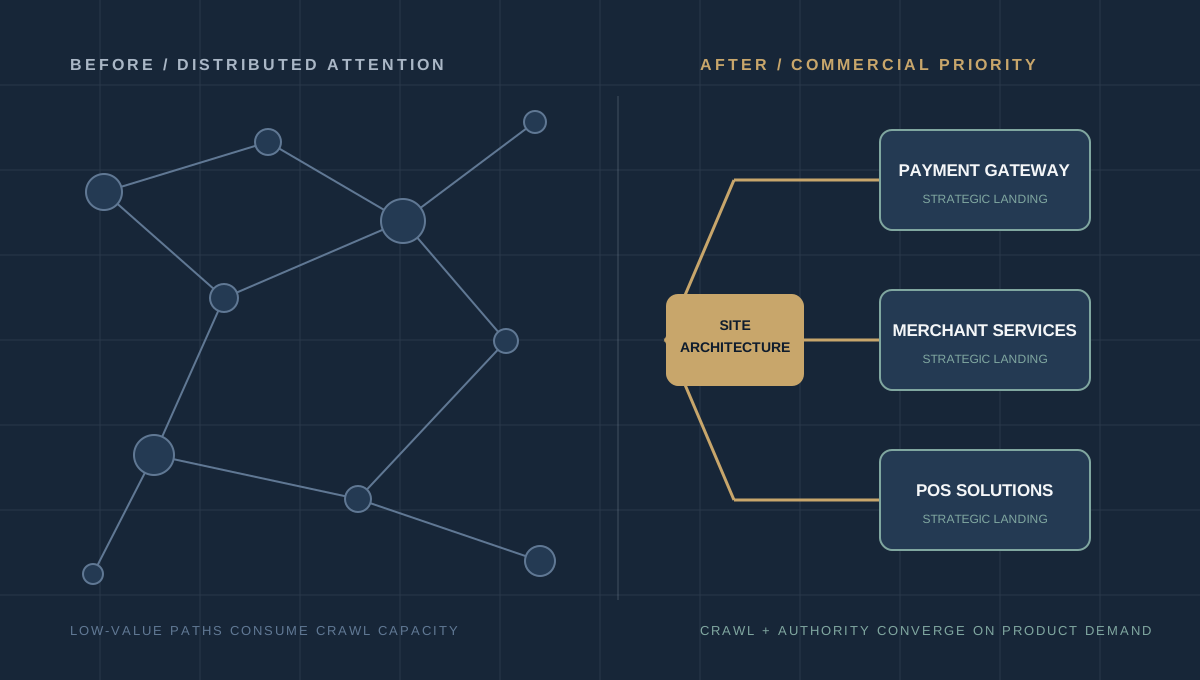
Product, service, supporting guide, industry solution and secondary pages received explicit roles in the wider architecture.
Access and internal pathways were adjusted so strategic pages earned faster, more frequent crawler attention.
Supporting content became an active bridge to product pages instead of a passive destination for disconnected traffic.
High-intent users need a specific answer, comparison, feature set and next action—not a generic corporate page. We built and strengthened focused landing pages capable of owning each valuable payment cluster and connecting discovery directly to customer acquisition.
At payment-industry scale, architecture changes touch customer journeys, product, engineering, marketing and sensitive operational requirements. We staged delivery by commercial value, SEO impact, technical dependency and deployment readiness.
Identify wasted paths, strategic query clusters and the pages capable of owning each commercial need.
Define the relationship between core services, supporting solutions, industries and low-priority content.
Shorten internal routes and redirect meaningful contextual links toward the most valuable landing pages.
Release changes in controlled groups, monitor crawler behaviour and strengthen pages gaining target visibility.
No historical analytics export or exact traffic series was supplied for this case. The visual below communicates the verified direction of impact and reported ranking outcome; it is not presented as an original analytics screenshot.
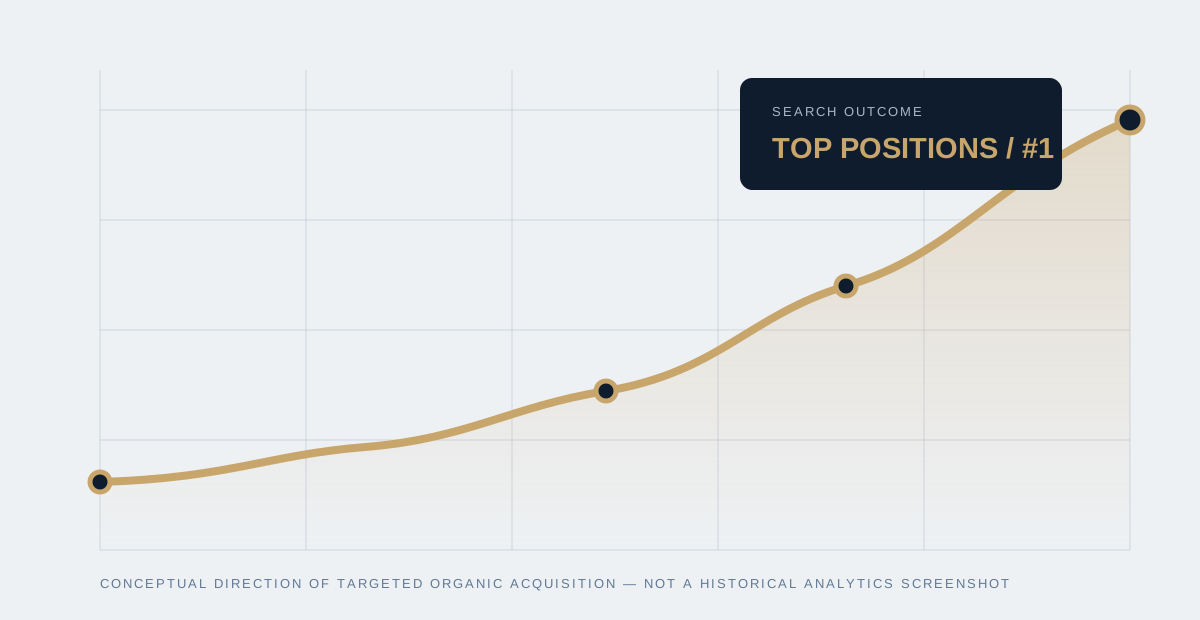
SEP reached leading search positions across strategic industry terms, converting product landing pages into destinations for valuable organic demand.
| Metric | Before | During the programme |
|---|---|---|
| Site architecture | Non-standard and dispersed | Product-led and clearly prioritized |
| Crawl budget | Consumed by low-value paths | Directed to strategic pages |
| Target-query visibility | Below the brand’s potential | Leading positions and #1 outcomes |
| SEO acquisition role | Limited and inefficient | Primary targeted organic channel |
| Internal authority | Dispersed | Concentrated on key landings |
The meaningful result was not simply more visits. A greater share of high-intent search reached the pages designed to explain, qualify and convert demand for SEP’s core services.
Visibility grew where users were actively choosing gateways, merchant services and payment tools.
Targeted organic traffic became one of the primary routes for acquiring payment-service customers.
Existing market recognition was converted into measurable ownership of strategic search demand.
Recognition cannot secure category search demand when crawlers and internal authority are pointed elsewhere.
Strategic product pages should consistently receive the clearest access and strongest revisitation signals.
Focused landings make the path from search need to product understanding and action far shorter.
Durable transformation balances commercial impact with technical dependencies and operational stability.
By rebuilding SEP’s structure and intelligently directing crawler attention, we closed the gap between brand authority and real search-market share—making organic visibility a foundation for digital growth.