Multiple pages claimed one intent
A blog article, educational guide, product page and subdomain could all compete for terms such as brokerage registration or investment funds.

Turning a fragmented financial website into a connected system of product hubs, clear intent ownership and compounding internal authority.
Farabi offered powerful financial products, but its information architecture did not reflect how people searched—or which products mattered most commercially.
Blog posts, education, product pages and transactional journeys overlapped, while key services lived across subdomains. Authority and internal links were dispersed instead of strengthening strategic pages. From 2021 to 2024, we redesigned URL architecture, established product and content clusters, rebuilt internal linking, implemented breadcrumbs and schema, and controlled overlap through canonicalization. Daily organic traffic grew from below 500 visits to more than 100,000, with positions one to three across major investment-product queries.
Farabi covered brokerage registration, online trading, investment funds, commodity exchange, futures, options, trading credit and investor education. Yet neither users nor Google received a single, coherent map connecting those services.
A blog article, educational guide, product page and subdomain could all compete for terms such as brokerage registration or investment funds.
Operational separation fragmented domain focus and prevented content, products and transactional tools from reinforcing one another.
Financial messaging and product journeys needed multi-layer approval, making execution speed as important as architectural quality.
Google received competing signals, users faced longer paths to action, and accumulated authority failed to reach the products with the highest commercial value.
Rather than optimizing pages in isolation, we redesigned the site’s information core: what every page owned, how it related to the rest of the ecosystem and where its authority should move next.
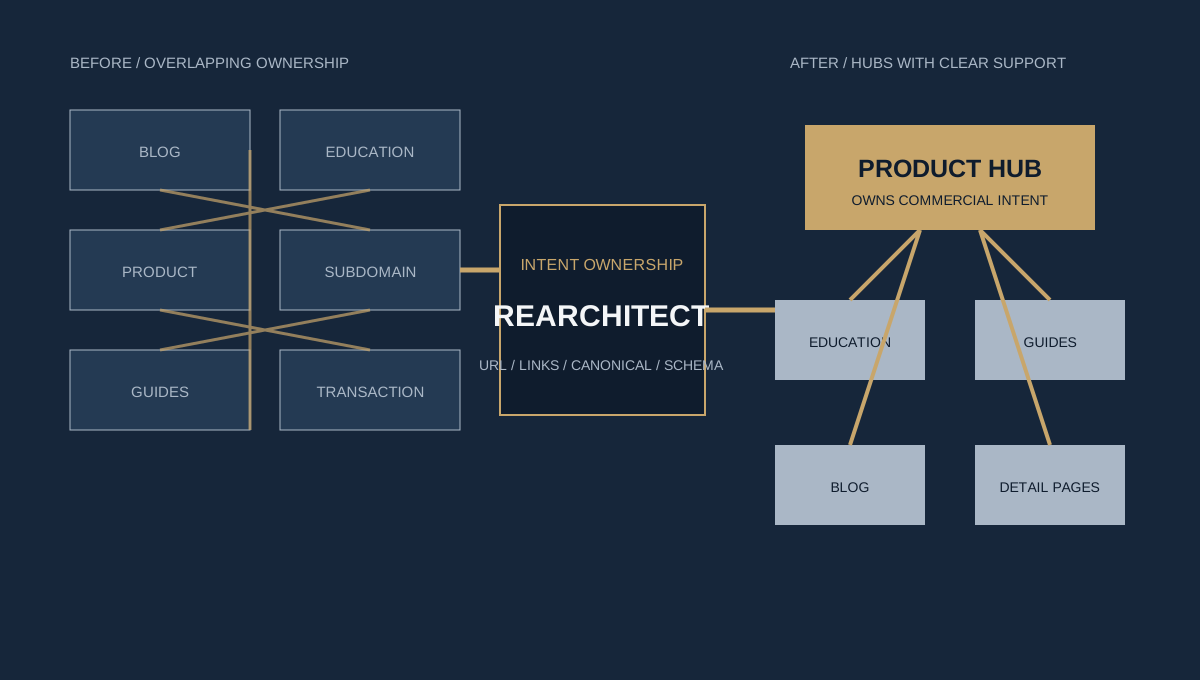
Product, category, education, blog and supporting pages were separated around their place in the search and customer journey.
Central hubs owned commercial intent while guides and articles answered informational needs and linked users toward action.
Canonicalization, content differentiation and internal-link correction reinforced one intended ranking URL per query cluster.
Internal links were rebuilt around commercial priority. Educational content stopped acting as a traffic dead end; relevant anchors, shorter crawl paths, breadcrumbs and schema guided both users and Google toward the correct product hubs.
Implementation required continuous coordination across engineering, content, infrastructure, marketing, senior leadership and stakeholders responsible for capital-market regulation.
Sequence changes by product value, technical dependency, regulatory approval and operational capacity.
Assign every strategic query and cluster to a single product, category or educational destination.
Deploy URLs, redirects, canonical rules, navigation and structured data in controlled phases.
Monitor ranking URL selection, crawl paths and product visibility, then strengthen emerging hubs.
The chart is a conceptual reconstruction based on the supplied project figures, not a historical analytics screenshot.
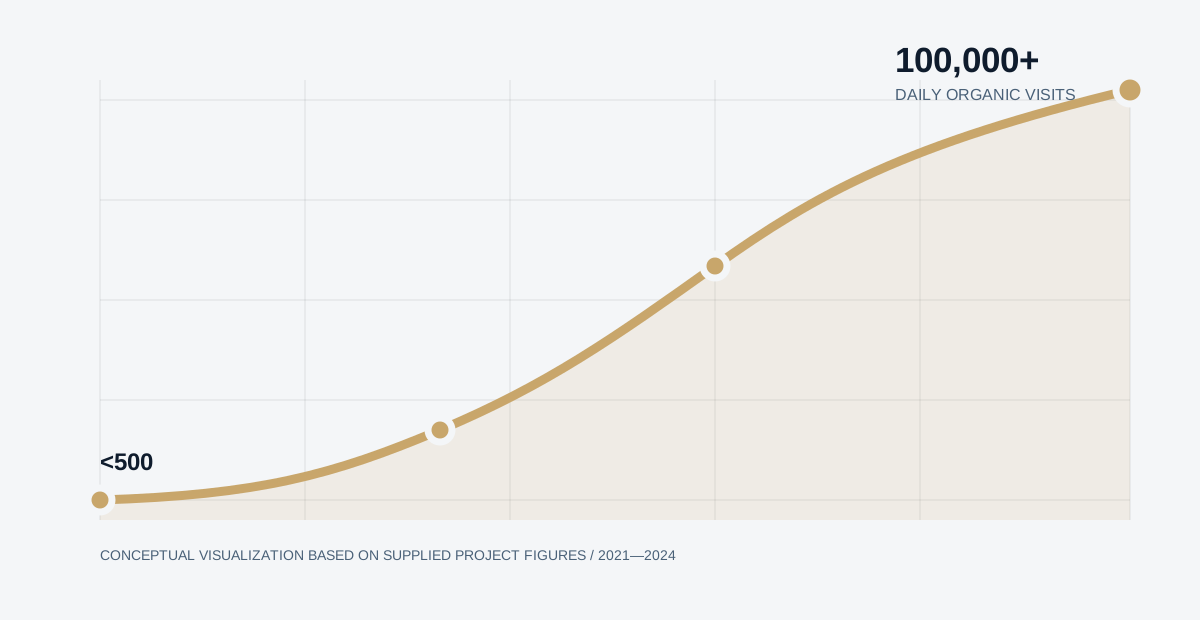
Traffic increased from fewer than 500 daily visits to more than 100,000 as strategic pages captured surging market demand.
| Metric | Before | After the strategy |
|---|---|---|
| Daily organic traffic | Below 500 | More than 100,000 |
| Page ownership | Blog, education and product overlap | Separated by intent |
| Service architecture | Fragmented across subdomains | Focused toward strategic pages |
| Product rankings | Limited or unstable | Positions 1—3 |
| Internal authority | Dispersed | Directed to hubs and products |
| Organic market share | Limited | Meaningful expansion during peak demand |
A period of exceptional public interest in investing created a major search opportunity. The new architecture enabled Farabi to capture that demand through product hubs instead of dispersing it across low-priority or competing pages.
Search became a scaled acquisition channel across investment and brokerage products.
Strategic terms including brokerage, registration, funds, trading and education reached leading positions.
Educational discovery connected to clear commercial paths and shorter journeys to action.
Every valuable query needs one unambiguous destination supported—not challenged—by surrounding content.
Links should reflect business priority and direct accumulated equity toward strategic products.
Architecture must shorten the journey from learning to selecting and using the right financial service.
Technical quality only creates value when sequencing accounts for regulation, dependencies and operational reality.
We turned Farabi’s scattered pages into a meaningful ecosystem of product hubs, supporting clusters and intentional authority flow—creating durable visibility in one of search’s most competitive financial markets.