Google could not see the content
The platform was built with Angular 1.3 and AJAX. Critical page content rendered in the browser, leaving crawlers with an incomplete or empty version of many pages.
Turning an unindexable Angular property platform into an organic growth engine—and changing the trajectory of the business.
Kilid’s SEO programme ran from 2018 to 2021, beginning with a problem that made every other SEO tactic irrelevant: Google could not reliably see the product.
We solved indexability within an Angular 1.3 architecture, built an intelligent rendering layer, redesigned the URL system and strengthened brand signals. Within roughly six months, daily organic traffic rose from below 1,000 visits to more than 17,000. Kilid also reached position one for some of the most competitive property terms in the market—growth that directly increased lead volume, team capacity and investor confidence.
When we joined Kilid, another team had already been working on the project for around six months. Organic traffic remained almost flat. For management, the lack of growth had become an existential warning: the CEO had made it clear that without progress, continued investment was at risk.
The platform was built with Angular 1.3 and AJAX. Critical page content rendered in the browser, leaving crawlers with an incomplete or empty version of many pages.
Hashbangs, IDs and developer-facing codes created addresses that were opaque to users and search engines—and impossible to scale around real property intent.
/#!/search?id=84&type=2&zone=11/buy/apartment/tehran/district-1Our experience with AJAX platforms pointed to the real constraint: content delivery. Angular Universal was not available for this stack, so we designed and implemented an intelligent rendering system at the application layer.
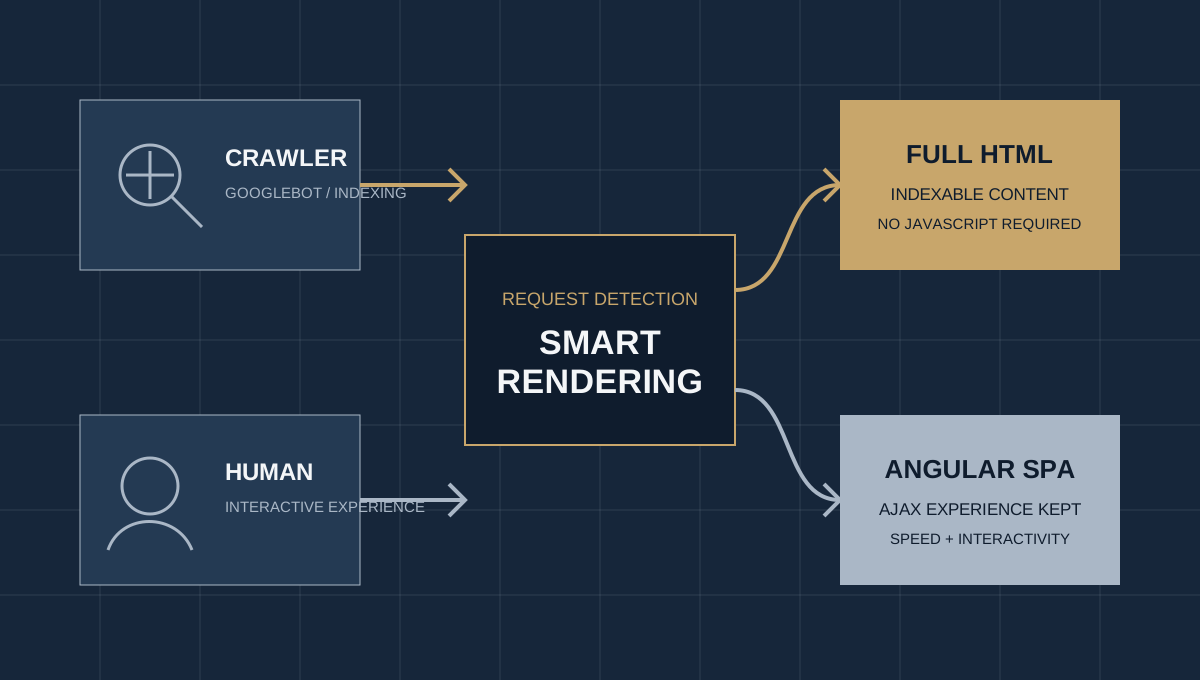
Requests from Googlebot and other recognised crawlers were routed to a fully rendered response.
Important copy, links and property context became available for crawling without JavaScript execution.
Human users continued to receive the fast AJAX experience, protecting interaction and perceived speed.
In practice, this was dynamic rendering before it became a widely documented search solution. We paired it with a full URL redesign built around service intent—buy or rent—and geographic dimensions such as city, district and neighbourhood. Rewrites were implemented in the framework and back end so the system remained stable and maintainable. Once crawlability was fixed, ongoing work expanded long-tail coverage and reinforced the brand signals supporting Kilid’s authority.
The original analytics screenshots are no longer available. The chart below is therefore a transparent reconstruction based on the project’s recorded figures—not a screenshot of the historical analytics interface.
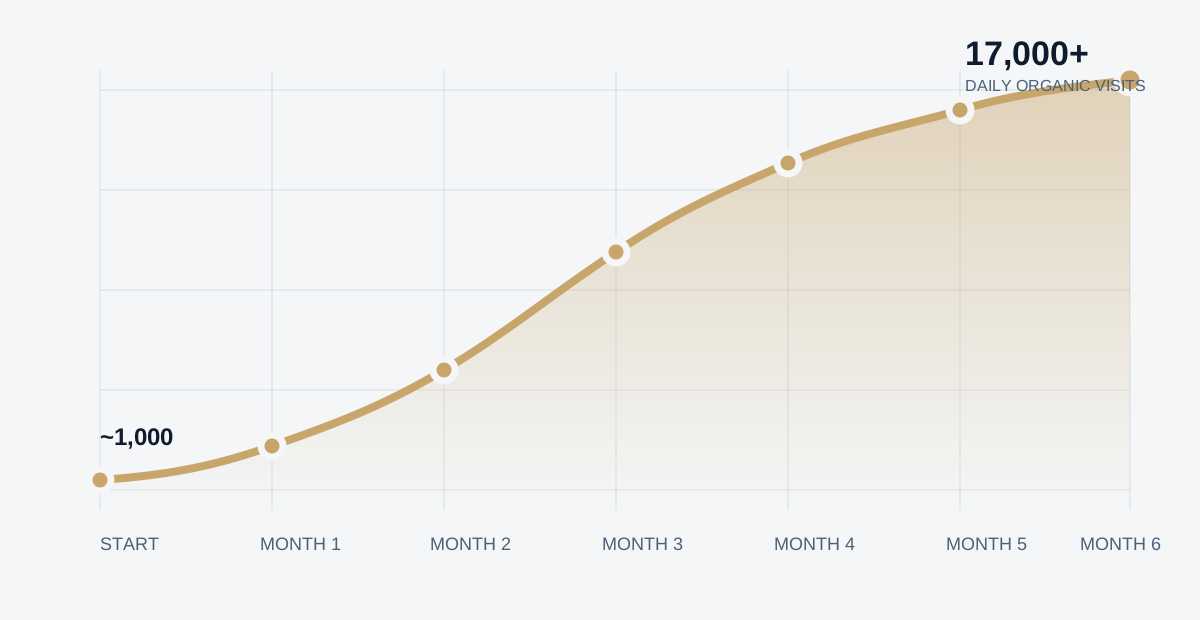
for highly competitive terms equivalent to “buy a house,” “buy an apartment,” “rent a house” and “rent an apartment”—overtaking the market’s largest incumbent platform.
| Metric | Before | After six months |
|---|---|---|
| Daily organic traffic | ~1,000 | 17,000+ |
| Most competitive keywords | No leading position | Position #1 |
| Call-centre team | 2 people | 40 people |
| Total company team | 15 people | 70 people |
The engagement was structured so the client could understand what would change, when it would change and when meaningful results could reasonably appear.
Root-cause analysis of indexability, Angular architecture review and intelligent rendering design.
Separate crawler and user rendering, plus a complete rewrite of the URL architecture.
Pages were recrawled and reindexed; core commercial keywords reached position one.
Long-tail acquisition expanded, organic share increased and traffic reached roughly 17,000 daily visits.
The result was not simply more sessions or more ranking keywords. Organic growth created enough demand to reshape staffing, support continued investment and give the company room to scale.
Daily organic visits increased from below 1,000 to more than 17,000, driving a major rise in inbound demand.
The call-centre operation expanded from 2 to 40 people to handle the increased lead volume.
The wider team grew alongside continued investor backing and a stronger path to scale.
Kilid shows how technical search work can directly change the fate of a business. By fixing indexability, rebuilding URL architecture and understanding how Google interacted with AJAX, we created visibility, won category-defining rankings and enabled real commercial growth.