Visits without buying intent
The blog inflated top-line traffic while contributing little to ticket or hotel revenue. It looked like SEO success but behaved like business waste.

How disciplined pruning and commercial focus overcame competitors spending up to 50 times more.
MrBilit was a contest between quality and quantity. The market leaders could spend at a scale MrBilit could not—and almost everything they published was indexed.
Instead of copying that model, we chose maximum focus. Through content pruning, crawl-budget management, URL redesign and intelligent inventory sanitization, MrBilit reached position one for the category’s hardest commercial queries, including “flight tickets” and “hotel booking.” The hotel section moved from an inactive entity to a revenue-generating vertical.
MrBilit had fallen into a familiar trap: large volumes of content with little connection to commercial intent. Thousands of articles about obscure waterfalls and local attractions attracted visitors who were unlikely to buy a flight or reserve a hotel.
The blog inflated top-line traffic while contributing little to ticket or hotel revenue. It looked like SEO success but behaved like business waste.
Low-value articles, broken filters, duplicate paths and irrelevant inventory consumed crawl attention that should have reached high-value sales pages.
Every low-value URL competed with a flight or hotel landing page for crawl attention, internal authority and indexation priority.
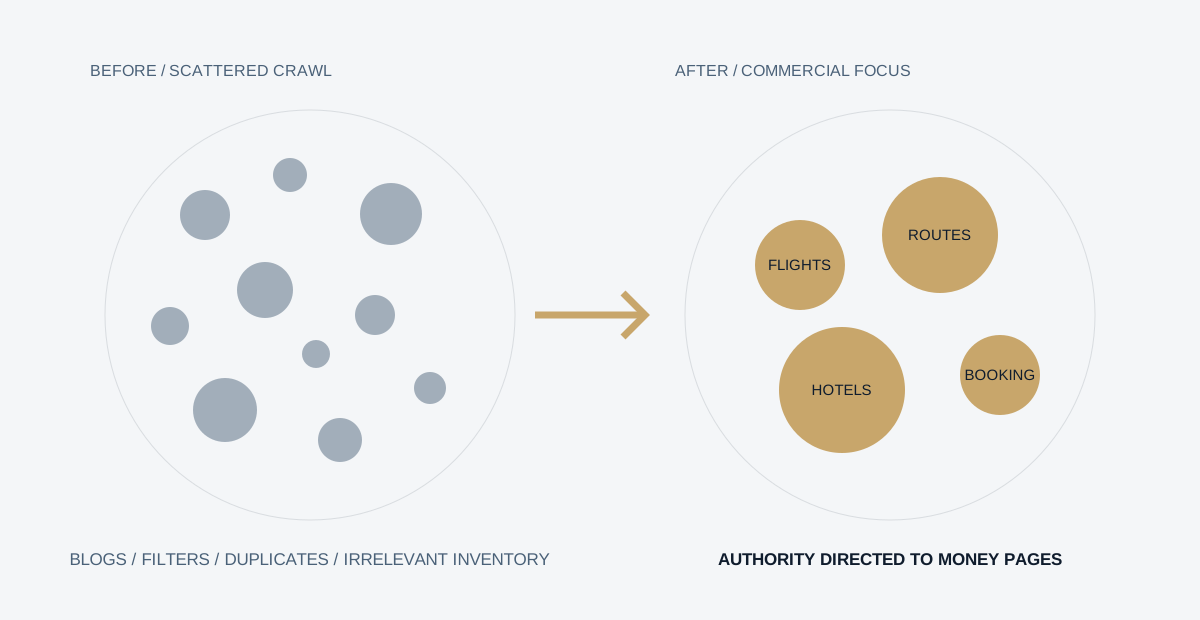
The approach was deliberately strict. We stopped trying to make every page visible and concentrated the site’s finite crawl and authority signals on the pages capable of creating revenue.
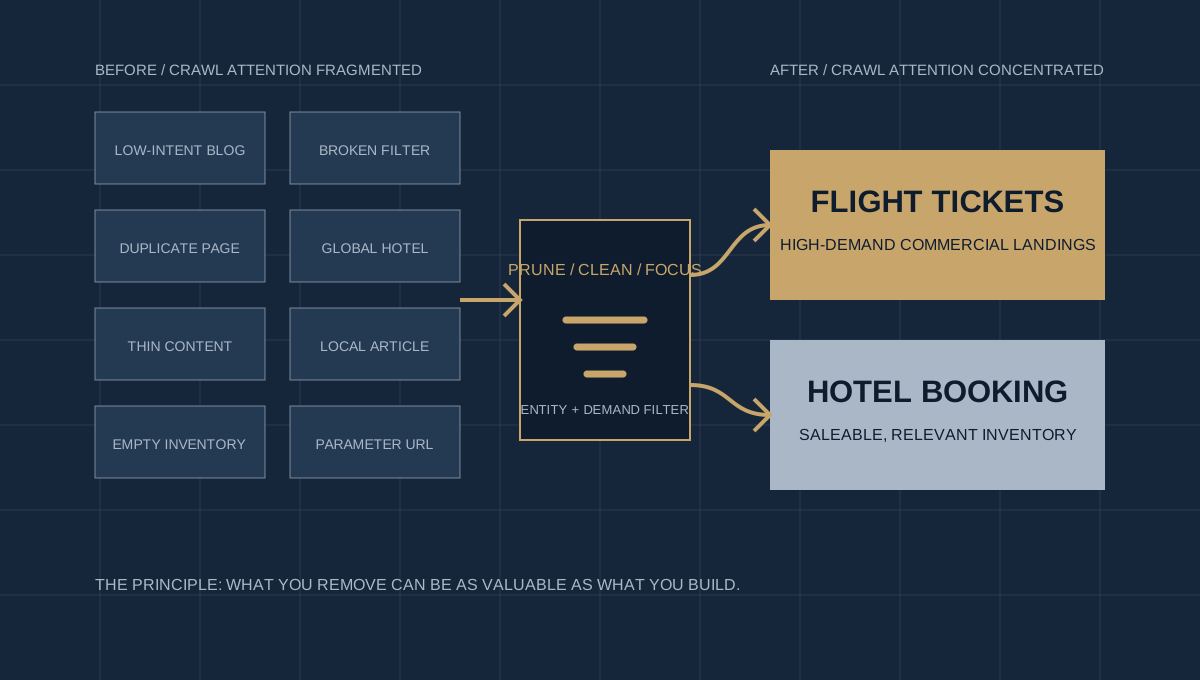
Entity and intent analysis identified blogs and pages that had no defensible role on a travel-commerce platform. They were removed from the crawl cycle.
The address system was redesigned using a proven large-scale architecture, turning URLs into clear signals about routes, products and entities.
API inventory was filtered so irrelevant hotels—from markets with no realistic Iranian demand—did not dilute the site’s hotel expertise.
The original feed exposed hotels from across the world, regardless of actual demand. We limited indexation to commercially relevant inventory. Google stopped seeing a disordered global database and started seeing a focused hotel-booking specialist.
The visualization below is a conceptual representation of the crawl-focus change. It does not claim to reproduce a historical analytics screenshot; the verified outcomes are documented separately in the results table.
MrBilit overtook far larger competitors for “flight tickets.” The win demonstrated that precise architecture and concentrated authority could outperform vastly greater advertising and content budgets.
| Metric | Starting position | Final position |
|---|---|---|
| “Flight tickets” keyword | Low ranking | Position #1 |
| “Hotel booking” keyword | Inactive vertical | Position #1 |
| Crawl efficiency | Wasted on blogs and duplicate paths | Focused on sales pages |
| Budget strategy | Unable to compete on spend | Won with roughly 1/50 of competitor budgets |
The 2022—2025 engagement advanced through four connected phases. Each reduced structural waste before authority was expanded around the commercial categories that mattered.
Classify content, filters and inventory by demand, relevance, crawl cost and commercial value.
Remove or exclude low-value pages and stop technical duplication from consuming search resources.
Deploy meaningful URL patterns and sanitize hotel inventory around realistic user demand.
Strengthen flight and hotel landing pages until the site achieved category-leading rankings.
Search visibility shifted toward the terms closest to revenue. The flight business won its defining query, while the hotel section changed from a dormant product area into an active source of income.
MrBilit secured the top position for the market-defining “flight tickets” query above larger competitors.
The previously inactive hotel category became visible, commercially relevant and revenue-generating.
Focused organic engineering overcame competitors operating with budgets up to 50 times larger.
While larger competitors indexed at scale through brand power and vast budgets, we concentrated MrBilit’s domain authority on money-making entities. The project proved a durable SEO principle: what you remove can be every bit as important as what you create.