Every component arrived at once
Scripts, styles and widgets were injected without component-level lazy loading. Bandwidth use surged, mobile experience deteriorated and LCP/TBT performance collapsed.
Rebuilding the technical core of a live, high-traffic marketplace—without stopping the platform for a single second.
Bama was an enterprise engineering challenge: a live automotive marketplace supporting up to one million concurrent users while each page carried roughly seven megabytes of raw HTML.
Over ten months, our technical team reduced the processing burden at its source, rebuilt the URL and crawl architecture, co-developed a dedicated Image Manager and redirected Google toward commercially valuable pages. Organic traffic lifted by 20% immediately after the major release, Bama reached position one for the equivalent of “buy a car,” and long-tail visibility stabilized—all with zero downtime.
This was not a conventional SEO engagement. Legacy application code, uncontrolled URL generation and raw seller-uploaded imagery were placing simultaneous pressure on users, servers and search crawlers.
Scripts, styles and widgets were injected without component-level lazy loading. Bandwidth use surged, mobile experience deteriorated and LCP/TBT performance collapsed.
Model, colour, year, option and city combinations created millions of meaningless paths, leaving core listings and new sections waiting to be crawled.
Old JPG and PNG formats, original seller dimensions and absent responsive sizing made vehicle imagery the hidden majority of page weight.
Off-the-shelf SEO tools could not operate at this scale. The solution required coordinated changes across server templates, rendering behaviour, URL governance, image delivery and release operations.
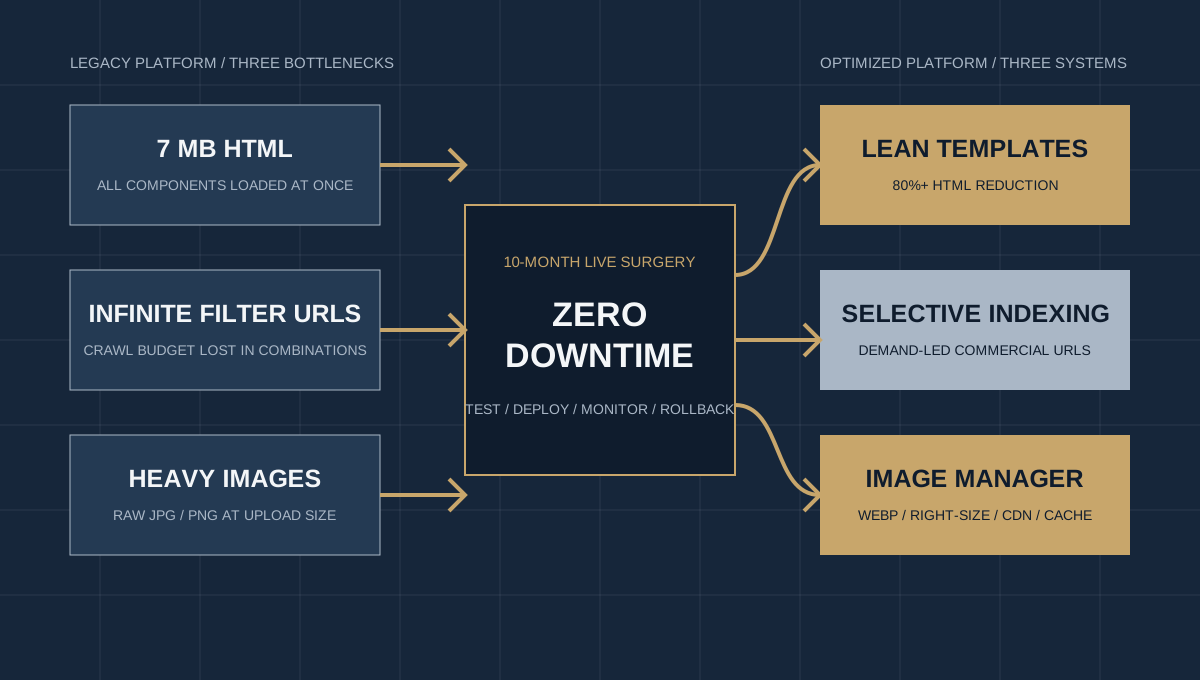
We rewrote URL generation and separated useful demand from combinatorial noise. Meaningless filter combinations were blocked through intelligent canonicalization, selective noindex rules and corrected internal linking.
Working with Bama’s engineering team, we developed a dedicated image-delivery layer that made every asset appropriate for its actual view, device and browser.
Legacy code was replaced progressively in production. Each release used low-traffic windows, prepared rollback paths and controlled testing. Templates, images, scripts and widgets moved to modern loading methods without a single second of service interruption.
A platform of this scale could not be rewritten overnight. Risk was reduced by sequencing the work and validating every release against technical, search and user signals.
Full DOM analysis, heavy-component identification and immediate closure of critical crawl gaps.
Progressive template rewrites, dead-code removal and deep HTML reduction.
Component-level lazy loading for images, scripts and non-critical widgets.
Development and deployment of responsive formats, compression, CDN and caching.
Aggressive sitemap refresh, coordinated digital PR and continuous Core Web Vitals observation.
Major structural improvements can take time to be recrawled. We compressed that delay through two coordinated signals launched with the technical release.
Every materially improved page received a current modification date, creating a clear recrawl signal across the corrected architecture.
Quality placements published alongside the release encouraged Googlebot to revisit the platform and encounter the faster experience immediately.
The illustration summarizes the direction and scale of change. It is a conceptual visualization based on the supplied project outcomes, not a historical analytics screenshot.
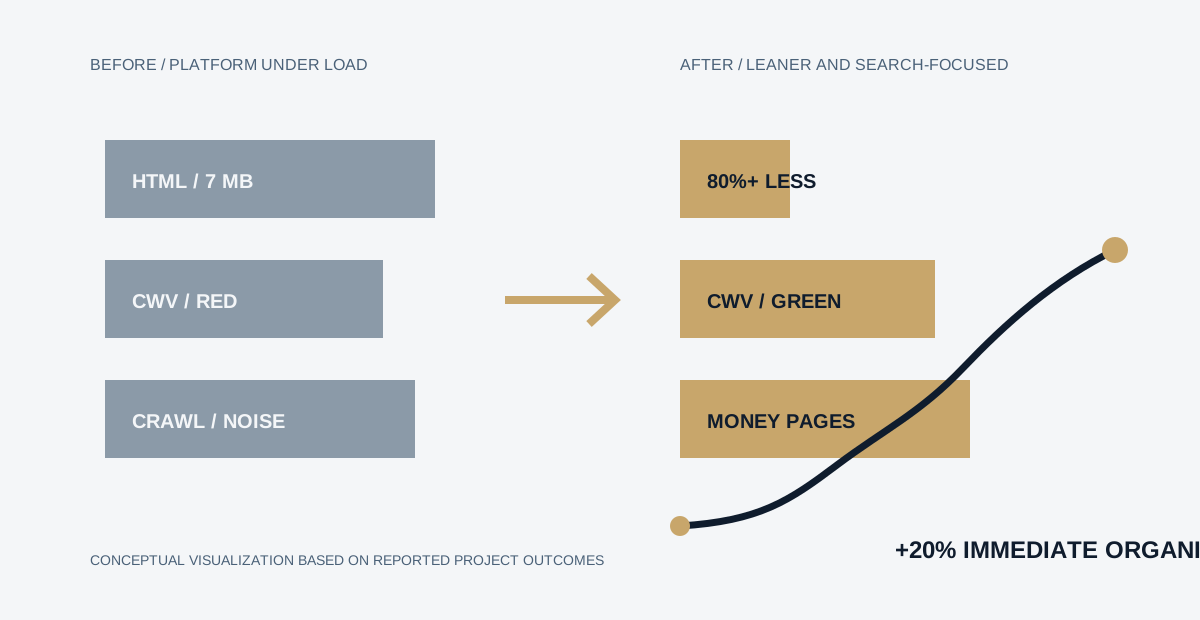
Organic traffic moved upward from the following day. The immediate lift became the opening signal for sustained growth and stronger long-tail visibility.
| Metric | Before | After ten months |
|---|---|---|
| Raw HTML per page | ~7 MB | Optimized and reduced by more than 80% |
| Indexation | Overrun by meaningless filters | Focused on commercial pages |
| Main commercial keyword | Unstable | Position #1 for “buy a car” |
| Organic traffic | Stagnant | Immediate +20% lift and sustained growth |
| Core Web Vitals | Red | Green: LCP, INP and CLS passed |
| Long-tail queries | Weak or absent | Stable visibility across hundreds of terms |
| Service downtime | — | Zero |
The project reduced user and infrastructure burden while concentrating visibility on the searches closest to marketplace demand. Technical efficiency and organic acquisition improved together.
An immediate traffic lift followed the release, with continued growth after Google processed the new system.
Bama secured the leading position for its defining commercial search query.
A ten-month enterprise refactor was completed without interrupting the live marketplace.
Removing megabytes of redundant code and millions of meaningless URLs created more value than adding another layer of content.
At one million concurrent users, generic plugins give way to dedicated systems such as the Image Manager.
Sequenced releases, testing and ready rollback plans allow fundamental change without downtime.
Accurate lastmod signals and coordinated authority activity shortened the gap between technical change and search impact.
Bama never stopped moving. We changed the infrastructure beneath it, turned crawler noise into commercial focus and helped a heavy platform become a faster market leader.